

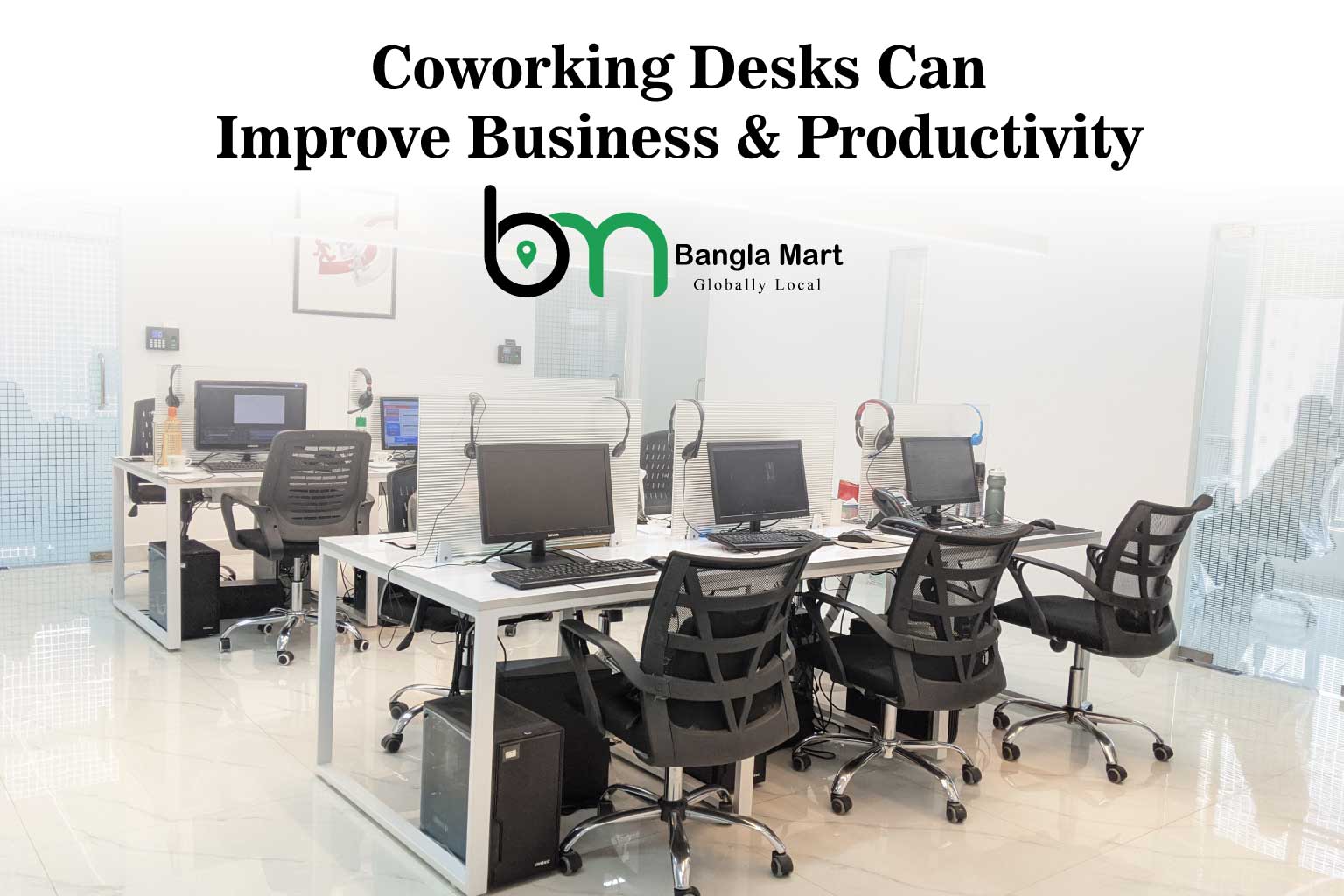
Modern work environments have changed significantly in recent years, with businesses and professionals seeking more flexible and productive ways to work. While working from home offers convenience, household distractions, limited facilities, and fewer opportunities for professional interaction can sometimes affect productivity.
Many professionals, startups, and growing businesses are therefore exploring flexible workspace solutions that provide a better balance between convenience and productivity. Coworking desks offer a professional setting with essential office facilities, networking opportunities, and a collaborative environment.
But how can coworking desks actually improve business productivity? In this blog, you will learn about the key benefits of coworking desks, their costs, suitable business types, and important factors to consider before renting one.
Focusing Points
Here are the key areas covered in this blog to help you make an informed decision about choosing a coworking desk:
- Learn how coworking desks can improve focus, efficiency, creativity, and collaboration.
- Understand the costs, membership options, and flexibility coworking desks offer.
- Find out which types of businesses and professionals can benefit from coworking desks.
- Explore different coworking desk options and the facilities commonly available.
- Discover practical factors to consider when choosing and renting the right coworking desk.
Coworking Desk Basic Knowledge And Their Facilities
A coworking desk is a shared workstation designed for individuals and professionals who need a productive and professional place to work without renting a full private office. Depending on the workspace and membership plan, users can access essential facilities that support daily business activities and create a comfortable working environment.
Different desk options are available to meet various work requirements and budgets. Hot desks provide flexibility for those who do not need a fixed workstation, while dedicated desks offer a reserved space for regular use.
Common facilities available with a coworking desk include:
- High-Speed Internet: Reliable internet supports smooth communication, online meetings, and daily business operations.
- Comfortable Workstations: Ergonomic desks and chairs provide a suitable setup for extended working hours.
- Meeting Rooms: Professional meeting spaces support client discussions, team meetings, and presentations.
- Printing & Scanning: Shared printing, scanning, and copying facilities help manage essential office tasks.
- Power & Charging Facilities: Easily accessible power outlets keep laptops and other devices ready for use.
- Reception Services: Some coworking spaces provide reception and basic administrative support for a professional experience.
- Common Areas: Lounge and shared spaces provide opportunities for breaks, informal discussions, and networking.
- Security: Controlled access and other security measures help protect members and their belongings.
These facilities make coworking desks a practical option for freelancers, remote workers, startups, and small businesses seeking a flexible and cost-effective workspace.
Can Coworking Desks Really Improve Business Productivity?
Yes, coworking desks can boost productivity through a focused environment, flexible workspace, essential facilities, and networking opportunities.
A well-organized coworking environment can help professionals maintain better focus and manage their daily tasks more efficiently. Access to ready-to-use facilities such as high-speed internet, meeting rooms, and office equipment also reduces the time and effort required to manage a traditional office setup.
Beyond basic workspace facilities, coworking desks encourage interaction among professionals from different industries and backgrounds. These connections can support knowledge sharing, creative thinking, collaboration, and new business opportunities, making coworking desks a practical solution for improving both individual and overall business productivity.
How Coworking Desks Improve Business Productivity
A productive workspace can significantly influence how efficiently professionals complete their daily responsibilities. Coworking desks combine a professional environment, essential office facilities, flexible workspace options, and opportunities for collaboration, helping businesses create a more efficient work routine.
Here are the points that describe how coworking desks improve business productivity:
1. Better Focus and Concentration
Working from home can involve household responsibilities, noise, and other distractions that interrupt important tasks. A dedicated coworking desk provides a structured environment where professionals can focus on their work.
- Dedicated workstations create a clear separation between work and personal activities.
- Professional surroundings can encourage better concentration.
- Fewer distractions can help employees complete tasks more efficiently.
Outcome: Better focus can contribute to improved work quality and daily productivity.
2. Access to Essential Office Facilities
Setting up and maintaining office infrastructure requires time, money, and ongoing management. Coworking desks provide access to essential facilities without requiring businesses to manage everything independently.
- High-speed internet
- Meeting and conference rooms
- Printing and scanning facilities
- Comfortable workstations
- Reception and shared office services
Outcome: Ready-to-use facilities help professionals spend more time on core business activities.
3.Improved Collaboration and Idea Sharing
A shared workspace brings professionals from different industries and backgrounds into the same environment. Regular interaction can create opportunities to exchange knowledge, discuss ideas, and solve problems more effectively.
- Informal discussions can generate new ideas.
- Teams can collaborate in shared meeting spaces.
- Professionals can learn from other businesses and industries.
Outcome: Greater collaboration can encourage creativity, innovation, and better business solutions.
4. Valuable Networking Opportunities
Building professional connections can be important for business growth, partnerships, and client acquisition. Coworking environments bring together entrepreneurs, freelancers, startups, and established professionals.
- Connect with potential clients and business partners.
- Exchange industry knowledge and experiences.
- Discover opportunities for partnerships and referrals.
Outcome: A strong professional network can create new opportunities while supporting long-term business growth.
5. Greater Time Efficiency
A traditional office setup involves finding a location, purchasing furniture, arranging utilities, and managing maintenance. Coworking desks come ready for immediate use, reducing the time required to establish a functional workspace.
- No lengthy office setup process.
- Essential facilities are already available.
- Maintenance is generally handled by the coworking provider.
Outcome: Businesses can focus their time and resources on productive and revenue-generating activities.
6. Flexible Workspace Options
Business requirements can change as teams grow, projects end, or working patterns shift. Coworking desks provide flexible membership and workspace options that can adapt to these changes.
- Choose hot desks for flexible working.
- Select dedicated desks for regular use.
- Upgrade or adjust workspace requirements as the business grows.
Outcome: Workspace flexibility helps businesses maintain productivity without being tied to unnecessary office space.
7. Reduced Office-Related Costs
Maintaining a traditional office involves several expenses beyond monthly rent. Shared workspaces distribute many of these costs across members, making coworking desks a practical option for businesses seeking cost efficiency.
- Lower setup and furnishing expenses.
- Shared utility and maintenance costs.
- Flexible membership plans based on workspace needs.
Outcome: Reduced overhead can free up more resources for core business operations and growth.
Coworking Desk vs Traditional Office: Which One Is Better?
Businesses have different workspace models available to support their daily operations. A shared desk environment provides flexibility, access to common facilities, and lower setup requirements, while a traditional office offers greater privacy, control, and dedicated space.
The table below compares both options based on the key factors businesses should consider before making a decision.
| Comparison Factor | Coworking Desk | Traditional Office |
| Cost | Lower setup and operating costs | Higher setup and maintenance costs |
| Flexibility | Flexible membership and rental options | Usually requires a long-term lease |
| Setup Time | Ready-to-use workspace | Requires furniture, equipment, and setup |
| Facilities | Shared access to office amenities | Business manages its own facilities |
| Maintenance | Usually handled by the coworking provider | Business is responsible for maintenance |
| Networking | Easy access to other professionals and businesses | Limited to employees and invited visitors |
| Scalability | Easy to increase or reduce workspace | Changes may require relocation or renegotiation |
| Privacy | Shared environment with limited privacy | Greater control over privacy |
Which one is better? It depends on the business’s specific needs. Coworking desks are generally more suitable for businesses that value flexibility, cost efficiency, networking, and minimal setup, while traditional offices can be a better fit for companies that need privacy, complete workspace control, and a permanent office environment.
How Coworking Desks Can Reduce Business Costs
Managing a traditional office involves several expenses, including rent, furniture, utilities, internet, maintenance, and office equipment. These costs can become a significant burden for startups, freelancers, and growing businesses, especially when they do not require a large dedicated office.
Shared workspace solutions can help reduce these expenses by providing ready-to-use workstations and access to common office facilities without requiring businesses to invest heavily in setup and maintenance. Flexible membership plans help businesses pay based on their actual workspace requirements, while shared amenities reduce the need for separate investments in meeting rooms, printing equipment, and other office resources.
By lowering setup and ongoing office expenses, businesses can allocate more of their budget toward core operations, employee development, and future growth. This makes coworking desks a practical option for organizations seeking a balance between professional workspace and cost efficiency.
5 Tips for Renting a Coworking Desk
Renting the right coworking desk can make a significant difference in your daily productivity, comfort, and overall work experience.
Before choosing a workspace, consider these practical tips:
- Compare Multiple Options
Research different coworking spaces and compare their location, pricing, facilities, membership plans, and overall environment. This helps you find an option that matches your business requirements and budget.
- Check the Available Facilities
Make sure the coworking desk includes essential facilities such as high-speed internet, power backup, meeting rooms, printing services, and comfortable workstations. Check which amenities are included in the membership and which may require additional charges.
- Understand the Membership Terms
Review the membership duration, payment structure, cancellation policy, access hours, and renewal terms before signing up. Choose a plan that provides enough flexibility for your current and future workspace needs.
- Look for Hidden Costs
Ask about additional charges for meeting rooms, printing, parking, storage, extra users, or other services. Understanding the complete pricing structure can help you avoid unexpected expenses.
- Visit the Workspace Before Renting
A physical visit gives you to evaluate the workspace environment, noise level, cleanliness, security, facilities, and overall comfort. It also gives you an opportunity to speak with the coworking provider before making a final decision.
Considering factors such as location, facilities, pricing, and membership terms can help create a comfortable, flexible, and productive coworking experience.
Last Word
Coworking desks have become a practical and flexible workspace solution for businesses and professionals looking to improve productivity while managing office costs. A professional work environment, essential office facilities, flexible workspace options, and networking opportunities can help individuals and teams work more efficiently.
Beyond providing a place to work, coworking desks can support better focus, collaboration, creativity, and business growth. As more businesses adopt flexible working models, coworking desks continue to offer a valuable solution for improving productivity and creating a more efficient working environment.
FAQs
- How does a coworking desk improve productivity?
Coworking desk have a structured environment where colleagues can collaborate and minimise distractions, eventually boosting productivity.
- Can all businesses benefit in a coworking desk set-up?
Yes, coworking desk are suitable for startups, small businesses, and larger organisations looking for a flexible and productive work environment.
- How to create a productive coworking desk?
A professional coworking desk can be productive when employees are offered a comfortable workspace. Things like a tidy functional space, incorporating some greenery, minimal noise levels, and a wide space for movement help teams concentrate on their tasks, improving overall focus.
- Are coworking desk cost-effective for businesses?
Absolutely. Coworking desk offer flexible leasing options, making it a cost-efficient choice compared to the traditional way of renting an office.
- Do coworking desk help with networking?
Yes, such environments encourage interaction between different professionals, which can lead to valuable business connections and collaborations.

