

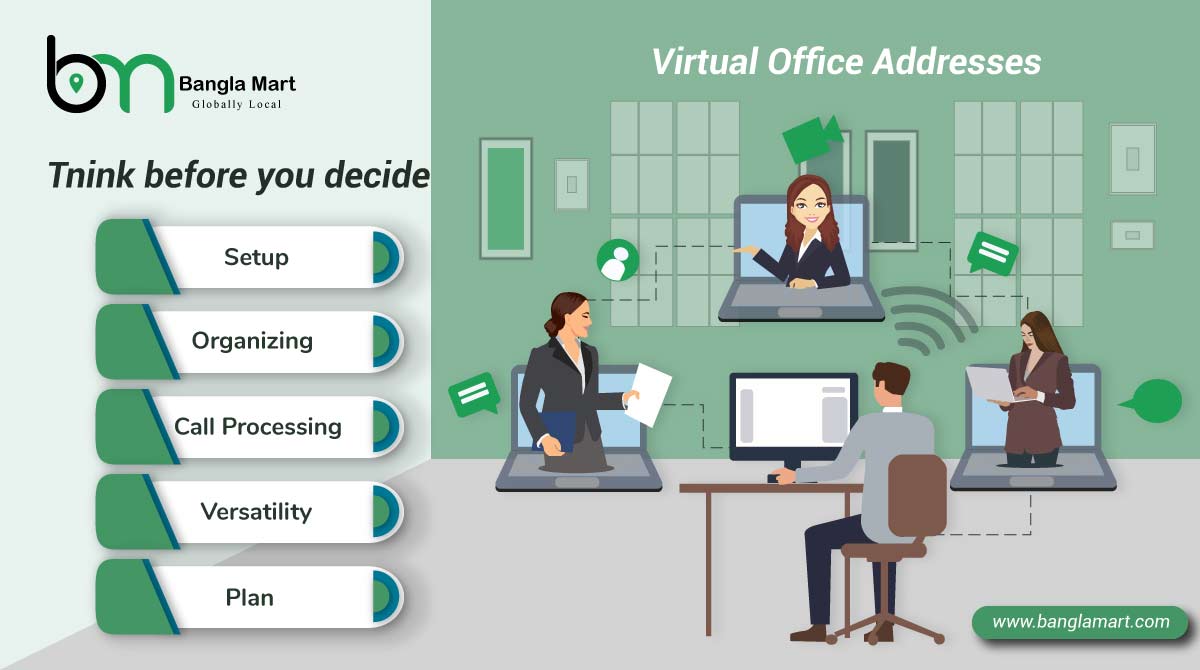
A virtual office address for business gives companies a professional business address without the expense of renting a physical office. It is a practical solution for startups, freelancers, remote teams, and growing businesses looking to establish a credible presence.
Beyond reducing overhead costs, virtual office services often include mail handling, call answering, and access to meeting rooms when needed. These features help businesses maintain a professional image while operating with greater flexibility.
In this blog, we explore what a virtual office address for business is, its key benefits, associated costs, legal aspects, and how it can help startups, SMEs, and remote businesses build a professional presence while reducing operational expenses.
Definition of Virtual Office Address
A virtual office address is a real business address that companies can use for official registration, mail handling, and professional communication without renting a dedicated physical office. It allows businesses to establish a credible presence while operating remotely or from any location.
Unlike a traditional office, a virtual office does not require employees to work on-site full-time. Instead, businesses gain access to essential services such as a registered business address, mail forwarding, receptionist support, and on-demand access to meeting rooms. This makes it an ideal solution for startups, freelancers, small businesses, and remote teams looking to reduce overhead costs while maintaining a professional image.
Focus Points
- A virtual office address for business enhances your company’s professional image by providing a prestigious commercial address, helping build trust with clients, investors, and business partners.
- Businesses can significantly reduce operational expenses with a virtual office by eliminating office rent, utility bills, maintenance costs, and administrative overhead while maintaining a professional presence.
- A virtual office address supports business registration, mail handling, and legal compliance while enabling startups, SMEs, and remote teams to operate flexibly and expand into new markets without opening a physical office.
7 Biggest Benefits Of Using A Virtual Office Address
A virtual office address is more than just a mailing address. It helps businesses build trust, remain legally compliant, reduce costs, and expand into new markets while maintaining operational flexibility.
Here are the 7 biggest benefits of using a virtual office address:
1. Professional Business Presence
A prestigious commercial address immediately improves your company’s image. Customers, investors, and business partners are more likely to trust a company with a recognized business location than one operating from a residential address.
Benefits:
- Creates a professional brand image
- Builds customer confidence
- Improves business credibility
- Enhances first impressions
2. Protects Your Privacy
Using your home address for business can expose your personal information. A virtual office keeps your residential address private while ensuring all business correspondence is handled professionally.
Benefits:
- Keeps personal address confidential
- Prevents unwanted visitors
- Separates business and personal life
- Improves data privacy
3. Business Registration & Legal Compliance
Most countries require businesses to have a registered business address for company formation, tax registration, licensing, and regulatory communication. A virtual office address can fulfill these requirements when provided by an authorized service provider.
It may be used for:
- Company registration
- Trade License
- Tax Registration (TIN, VAT, GST)
- Business bank account documentation
- Government correspondence
4. Cost Savings
Renting office space is expensive. A virtual office gives businesses a professional address without paying high rent, office maintenance, furniture costs, utilities, or administrative expenses.
Cost Benefits:
- No office rent
- Lower utility expenses
- Reduced maintenance costs
- Affordable monthly plans
- Better budget allocation
5. Flexible Remote Working
Modern businesses increasingly operate remotely or through hybrid work models. A virtual office allows employees to work from anywhere while the business maintains a fixed professional address.
Advantages:
- Supports remote teams
- Operate from anywhere
- Better work-life balance
- Business continuity
6. Mail Handling & Business Support
Most virtual office providers include additional services beyond providing an address.
These services often include:
- Mail receiving
- Mail forwarding
- Document scanning
- Dedicated phone number
- Receptionist services
- Meeting room access
These features help businesses appear larger and more professional.
7. Business Expansion
A virtual office makes entering new cities or countries significantly easier. Instead of opening expensive branch offices, businesses can establish a local presence using virtual office services.
This helps companies to:
- Expand into new markets
- Test business locations
- Reduce expansion risks
- Build regional credibility

The global virtual office market is experiencing rapid growth, driven by the increasing adoption of remote work, hybrid work models, and flexible business solutions. According to recent market research, the industry was valued at approximately USD 54.99 billion in 2023 and is projected to reach USD 160.37 billion by 2030, growing at a CAGR of 16.52% during the forecast period (2024–2030). This strong growth reflects the rising demand for cost-effective workspace solutions among startups, SMEs, and large enterprises worldwide.
Difference Between a Virtual Office Address and a Physical Office
Virtual office addresses and physical offices serve different business needs. The comparison below highlights their key differences in cost, flexibility, and functionality to help you choose the best solution for your business.
| Feature | Virtual Office Address | Physical Office |
| Office Space | No dedicated workspace | Permanent office |
| Cost | Low monthly fee | High rent & utilities |
| Flexibility | Work from anywhere | Fixed location |
| Business Address | Professional commercial address | Physical office address |
| Mail Handling | Yes | Yes |
| Meeting Rooms | Available on demand | Permanent |
| Privacy | Protects home address | May require public office location |
| Scalability | Easy to expand | Expansion is expensive |
Cost of a Virtual Office Address
| Expense Category | Virtual Office Address | Traditional Physical Office |
| Monthly Office Rent | $25–$200 | $1,000–$5,000+ |
| Utilities (Electricity, Internet, Water, etc.) | $0–$20 | $200–$800 |
| Office Furniture & Equipment | $0 | $2,000–$10,000+ (One-Time) |
| Office Maintenance & Cleaning | Included / $0 | $100–$500/month |
| Receptionist & Mail Handling | Included or $10–$50/month | $2,500–$4,000/month (Employee Salary) |
| Meeting Room Access | $20–$100/hour (On Demand) | Included in Rent |
| Total Estimated Monthly Cost | $25–$250 | $1,500–$7,000+ |
| Estimated Annual Cost | $300–$3,000 |
$18,000–$84,000+ |
Virtual Office Address for Tax and Legal Purposes
A Virtual Office Address isn’t just about looking professional — it can also serve as a legally recognized business address for tax registration, licensing, and other official requirements. However, its use depends on local laws, and not all virtual addresses are created equal.
Let’s break down how virtual office addresses are used for legal and tax compliance:
1. Business Registration and Company Formation
In many countries, a business must have a registered address to legally operate. A virtual office address can fulfill this requirement if it meets certain legal criteria, such as being in a commercial zone and having a verifiable physical location.
Use Cases:
- Registering a private limited company (e.g., LLC or Ltd.)
- Registering a sole proprietorship or partnership
- Updating your official address with government agency
Tax Registration (TIN, VAT, GST, etc.)
Your virtual office address can also be used for tax registration purposes, such as:
TIN (Tax Identification Number)
VAT Registration
GST or Sales Tax Numbers
Corporate Tax Filings
Governments typically require a registered business address to send legal correspondence, tax notices, and inspection notices — a virtual address helps ensure this mail is received and processed efficiently.
- Bank Account Opening
When opening a business bank account, banks usually request:
- Valid business registration documents
- Proof of address (such as utility bill or lease)
- NID/passport and personal address proof
If your virtual office provider offers utility bills or tenancy contracts (even for shared space), your address is more likely to be accepted by banks.
- Licensing and Permits
Need a trade license, import/export license, or other industry-specific permit? A valid commercial address is often mandatory.
Examples:
- Trade License from your city or municipal corporation
- Export Registration (ERC) and Import Registration (IRC)
- E-commerce licensing, especially for product returns and local operations
Food handling, education, and healthcare permits (where physical inspection may apply)
- Legal Notices and Compliance Communication
A registered address must be able to receive legal notices, government letters, and compliance warnings. A good virtual office provider will offer:
- Physical mail handling and forwarding
- Email alerts for received legal documents
- Document scanning (in some packages)
- Assistance in legal forwarding or representation
Future Growth of the Virtual Office Market in Modern Business
The growing adoption of remote and hybrid work drives the future of virtual offices. As businesses seek flexible, cost-effective solutions, virtual offices are becoming a preferred choice for startups, SMEs, and global companies. Features like AI-powered receptionist services, digital mail handling, and on-demand meeting spaces are expected to become standard offerings.
Industry reports project the global virtual office market to grow from USD 54.99 billion in 2023 to USD 160.37 billion by 2030, at a CAGR of 16.52%. This strong growth indicates that virtual office solutions will continue to play a vital role in helping businesses reduce costs, expand into new markets, and maintain a professional presence in the digital era.
Conclusion
A virtual office address for business is a smart investment for startups, freelancers, SMEs, and growing businesses seeking a professional image without the high costs of a physical office. It improves credibility, protects privacy, supports legal compliance, and enables flexible operations while keeping overhead expenses low.
By choosing a reliable virtual office provider, businesses can establish a trusted presence, simplify administrative processes, and scale into new markets with confidence.
Frequently Asked Questions
1. What is a virtual office address for business?
A virtual office address for business is a real commercial address that companies use for business registration, official correspondence, mail handling, and branding without leasing a permanent physical office. It helps businesses maintain a professional presence while operating remotely.
2. Is a virtual office address legal?
Yes. Virtual office addresses are legal in many countries when provided by an authorized service provider and used in accordance with local business registration, tax, and licensing regulations. Always verify the legal requirements in your jurisdiction before registering.
3. Can I register my business using a virtual office address?
Yes. In many jurisdictions, a virtual office address can be used for company incorporation, trade licenses, tax registration, and other official business documents. However, eligibility depends on local laws and the type of business entity.
4. Who should use a virtual office address?
A virtual office is ideal for startups, freelancers, consultants, remote teams, eCommerce businesses, SMEs, and companies expanding into new cities or international markets. It is especially beneficial for businesses that want a professional address without the high cost of a traditional office.
5. What services are typically included in a virtual office package?
Most virtual office providers offer a professional business address, mail receiving and forwarding, document scanning, call answering, receptionist services, meeting room access, and business support services. The available features vary depending on the provider and subscription plan.

