

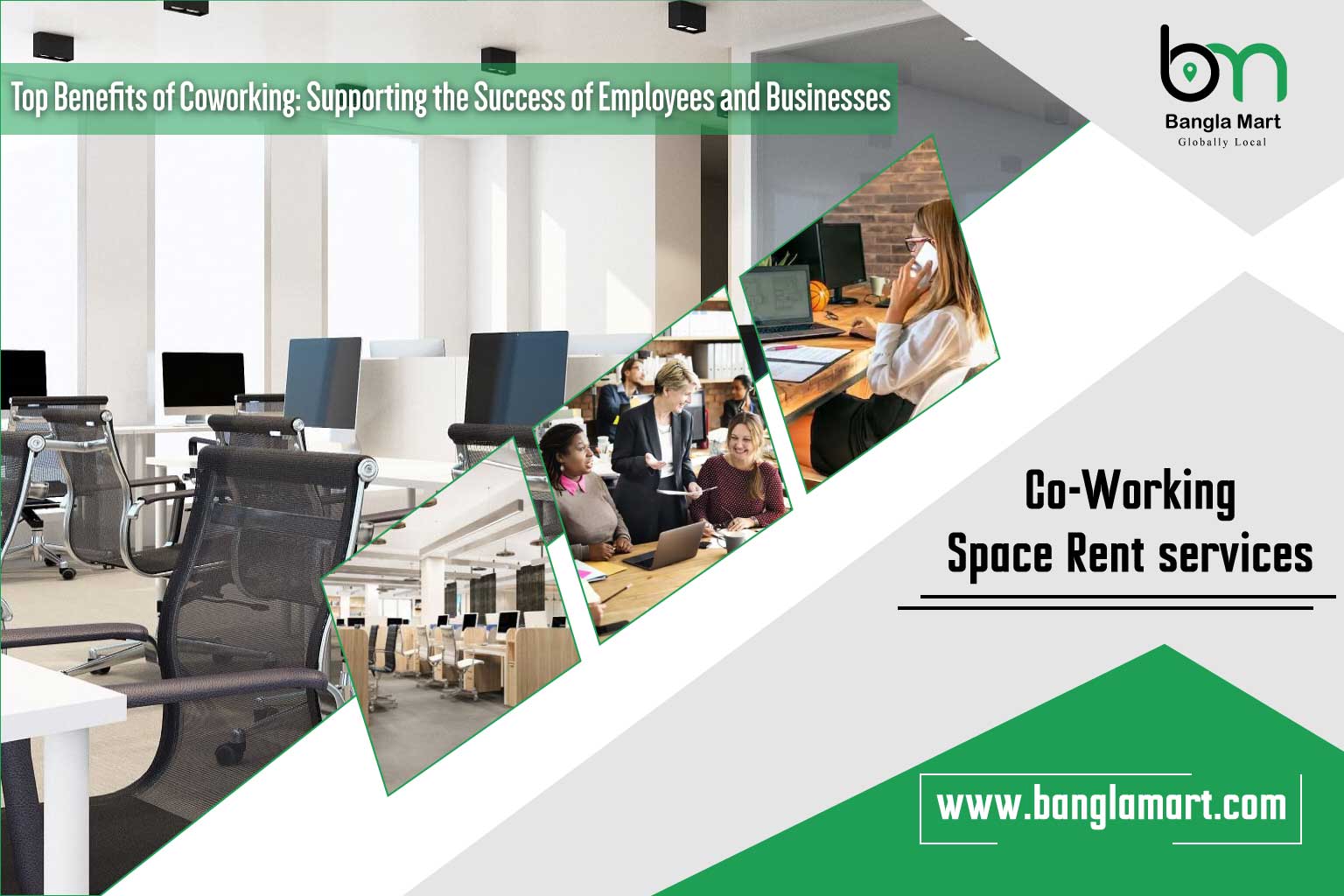
Coworking gives employees a professional place to focus and gives businesses workspace without the operational burden of setting up a conventional office. Its main advantages are flexibility, ready-to-use facilities, easier collaboration, professional meeting space and the ability to adjust capacity as a team changes.
The model is especially relevant for remote employees, freelancers, startups and small businesses that need more structure than a home office but less commitment than a traditional lease. Remote work remains a significant part of modern employment: in the first quarter of 2024, 22.9% of people at work in the United States teleworked at least some hours, according to the U.S. Bureau of Labor Statistics report “Telework trends” published in March 2025. This is international context, not Bangladesh-specific market data.
KEY TAKEAWAYS
- Coworking converts many office setup tasks into a managed service.
- Employees gain separation between home and work, plus spaces suited to focus and meetings.
- Businesses can select desks, rooms or private offices according to current need.
- The right choice depends on privacy, internet reliability, access, location and total cost.
What Is a Coworking Space?
A coworking space is a shared, professionally managed workplace used by people from different companies or by independent professionals. Depending on the provider and plan, users may book a hot desk, dedicated desk, private office or meeting room for a short period or a recurring term.
Unlike a coffee shop, coworking is designed for work. Unlike a conventional office lease, the user usually does not need to arrange every desk, utility, reception function or shared facility separately. Banglamart describes its serviced coworking space in Bangladesh as a ready-to-use option that includes different workspace types and support facilities. Confirm the exact inclusions, access hours and charges in writing before booking.
Coworking is also different from a virtual office. Coworking provides physical workspace access. A virtual office solution mainly provides business-address and support services, although some plans may allow users to book meeting rooms or workspace separately.
What Are the Top Benefits of Coworking?
The seven strongest coworking benefits are flexible commitment, lower setup burden, professional infrastructure, better work boundaries, access to collaboration spaces, easier professional interaction and scalable capacity. These benefits are practical, but they are not automatic. Results depend on the provider, plan, team, work type and management practices.
1. Flexible workspace commitment
Coworking lets a person or company choose workspace around current demand rather than committing immediately to a large, fixed office. A solo consultant may need one desk. A growing team may need several desks or a private room. A distributed company may need meeting space only on selected days.
This flexibility can reduce the risk of paying for capacity that is not being used. It can also support temporary projects, visiting teams or a trial period before a longer property decision. However, businesses should compare the total plan cost, deposits, add-ons, renewal terms and cancellation conditions instead of assuming every coworking package is cheaper.
2. Lower office setup burden
A conventional office requires more than rent. The business may need furniture, internet installation, utilities, cleaning, maintenance, security arrangements and shared equipment. Coworking can combine several of those functions into one managed workspace service.
The U.S. General Services Administration lists furniture, communal office equipment, secure wireless internet, shared kitchens, restrooms and open seating among the typical inclusions in the flexible coworking services it described for federal users. Its report also notes limitations: shared spaces may not offer exclusive access, custom alterations or special security controls. Review the GSA workplace report for the original government context.
3. Professional facilities without managing an office
A suitable coworking plan can provide a business-ready environment with desks, internet, electricity, reception support and bookable rooms. This allows employees and owners to spend less time coordinating routine workspace tasks and more time on clients, delivery and team management.
Facilities differ sharply across locations. Before signing up, test the internet during busy hours, ask about backup power, inspect call privacy and confirm whether printing, parking, refreshments, meeting-room hours and after-hours access cost extra. “Fully serviced” should never replace a written list of inclusions.
4. Stronger separation between work and home
A dedicated place to work can create a clearer start and end to the day. That separation may help remote employees avoid household interruptions and reduce the feeling that work is always present. It can also provide a more appropriate background for calls, interviews and confidential discussions.
Coworking does not guarantee higher productivity. Government research shows a more careful picture. A 2024 BLS analysis found that growth in remote work was positively associated with total factor productivity growth across 61 U.S. industries, but it also stressed that remote work was only one factor and that previous studies produced mixed results. Read the BLS study “The rise in remote work since the pandemic and its impact on productivity” for the methodology and limitations.
5. Meeting and collaboration space on demand
Remote teams do not need a full office every day to benefit from in-person work. They may need a quiet room for a client presentation, a team planning session, an interview or a workshop. Coworking allows businesses to access those settings without maintaining a dedicated conference room throughout the month.
If meetings are central to your work, compare room capacity, display equipment, video-call quality, sound isolation, guest rules and booking lead time. Banglamart offers a meeting room in Dhaka that can be booked for business use; verify the live room specification and availability before inviting participants.
6. Professional interaction without forced networking
Shared workplaces put independent professionals and teams near one another. That proximity can make it easier to exchange recommendations, find specialist support or learn about a local business opportunity. For a founder or freelancer who usually works alone, even light social contact can make the workday feel less isolated.
Networking should be treated as a possible benefit, not a promised business outcome. A quiet member may gain mainly from the workspace, while a sales-focused founder may value events and introductions. Ask what community activities exist and whether members can participate without disrupting focused work.
7. Space that can scale with the team
A company may begin with two desks, add a private office and later book a larger meeting room for a project. That progression is simpler when one provider offers several workspace formats. It is particularly useful when headcount or attendance changes faster than a conventional property decision can accommodate.
Scaling still requires planning. Confirm whether adjacent desks or larger rooms are actually available, how much notice is required and whether rates change with capacity. Businesses that need permanent branding, controlled access or specialised infrastructure may be better served by a serviced office space or a conventional office.
How Does Coworking Support Employees?
Coworking supports employees by providing a third option between home and the company office. It can be useful when home is crowded, internet service is unreliable, a professional meeting is scheduled or an employee needs a shorter commute to a work-ready location.
The best employee experience depends on job design. Someone doing confidential calls needs privacy. A designer may value natural light and a large desk. A distributed team may need video-enabled rooms. Employers should therefore match workspace features to tasks rather than giving every employee the same plan.
Employee checklist
- Reliable internet and backup power
- Comfortable desk, chair, lighting and temperature
- Quiet areas and private call options
- Safe entry, clear access hours and secure storage
- Convenient travel time and nearby transport
- A written policy for reimbursement, data security and attendance
How Does Coworking Help Businesses Grow?
Coworking helps a business preserve operational flexibility while presenting a professional setting to clients and employees. It can shorten setup time, support a small team before a permanent office is justified and provide rooms that improve the quality of meetings and interviews.
The financial advantage is not simply “lower rent.” The relevant comparison is total occupancy cost: base charge, utilities, furniture, cleaning, internet, reception, maintenance, deposits, fit-out, meeting facilities and the internal time spent managing them. A coworking plan may be attractive when it replaces several of these costs, but a stable large team may achieve a lower per-person cost with another model.
Business growth also increases privacy and control requirements. Ask how guests are managed, where documents are stored, whether calls can be overheard and what network security the provider supplies. Use your own approved devices, access controls and VPN where required; a shared office does not transfer responsibility for company data to the workspace provider.
Coworking vs Working From Home vs a Traditional Office
No workspace model is best for every person or business. Home working offers maximum convenience, coworking offers managed flexibility, and a traditional office provides more control. The right choice depends on how often the space is used and how much privacy, customisation and capacity the work requires.
| Factor | Home office | Coworking | Traditional office |
| Commitment | Usually low | Short or recurring plans may be available | Usually higher and longer |
| Setup responsibility | Handled by the worker or employer | Many shared facilities are managed | Handled by the tenant |
| Privacy | Depends on the home | Varies by desk or room type | Higher control is possible |
| Professional meetings | Often limited | Bookable rooms may be available | Dedicated space is possible |
| Team scaling | Limited by the home | Add desks or rooms if available | May require more property |
| Brand customisation | Low | Limited in shared areas | Usually greater |
| Best fit | Independent focused work | Flexible and hybrid work | Stable teams with control needs |
A fourth option is a virtual office, which is suitable when the main need is a business address, mail handling or call support rather than a daily desk. Companies can combine a virtual office with meeting-room or coworking access when needed.
Who Should Use a Coworking Space in Dhaka?
Coworking in Dhaka is most suitable for people who need a professional workplace without operating a full office. Typical users include freelancers, remote employees, consultants, startup teams, small companies, visiting professionals and project teams.
- Freelancers who need a reliable desk and professional meeting environment.
- Remote employees whose home setup is not suitable every day.
- Startups that want to delay a large office commitment while validating growth.
- SMEs that need a furnished team room or private office with shared support.
- International or distributed teams that need a temporary base in Dhaka.
- Businesses that need meeting space for clients, training or recruitment.
Location should follow the people and clients using the space. Banglamart has service pages for coworking space in Gulshan, coworking space in Dhanmondi and coworking space in Motijheel. Check the current address, inventory, hours and facilities directly, because availability can change.
What Should Businesses Verify During a Coworking Space Visit?
From Banglamart’s experience supporting professionals and businesses in Dhaka, a workspace tour should test more than desk appearance. Visitors should check internet stability during working hours, backup power, call privacy, meeting-room availability, guest access and the complete monthly cost.
A practical visit should include an internet-speed test, a short video call and an inspection of the exact desk or room included in the proposed plan. Businesses should also request written confirmation of access hours, deposits, parking, printing charges and cancellation terms before booking.
How Do You Choose the Right Coworking Space?
Choose a coworking space by testing the features that affect your actual work, not by comparing photos alone. Start with location and total cost, then verify reliability, privacy, access, meeting capacity and contract terms. A short trial can reveal problems that a tour will not.
- Define the work pattern. Estimate how many people will attend, on which days and for how many hours.
- Select the workspace type. Choose among a hot desk, dedicated desk, private office, meeting room or combined plan.
- Test the essentials. Check internet speed, backup power, chair comfort, noise and mobile reception during working hours.
- Review privacy and security. Inspect call areas, guest access, storage, CCTV policy and network arrangements.
- Calculate total cost. Include taxes, deposits, printing, parking, meeting rooms, extra hours and cancellation charges.
- Read the agreement. Confirm access hours, renewal, notice, refund, damage and service interruption terms.
- Run a trial day. Use the space during a normal workday before making a recurring commitment.
Frequently Asked Questions
1. What is the biggest benefit of coworking?
The biggest benefit is managed flexibility. A user can access a professional workspace and shared facilities without personally setting up every part of an office. The value depends on transparent pricing, reliable services and a workspace type that matches the work.
2. Is coworking better than working from home?
Coworking is better when home has interruptions, weak infrastructure or no suitable meeting area. Home may be better for private, independent work and zero commuting. Many people use both, choosing coworking for focused days, meetings or team sessions.
3. Can coworking help a small business reduce costs?
It can reduce setup and management costs when furniture, internet, utilities, cleaning and meeting facilities are included. It is not automatically cheaper. Compare the complete monthly cost and expected use with a serviced or conventional office.
4. Are coworking spaces suitable for remote teams?
Yes, when the space offers reliable connectivity, suitable rooms, privacy and flexible capacity. Remote teams can use coworking for onboarding, planning, interviews and selected collaboration days without asking every employee to attend a central office daily.
5. What should I check before booking a coworking space in Dhaka?
Check location, internet, backup power, noise, access hours, security, call privacy, meeting-room availability and total charges. Ask for written plan inclusions and test the space during a normal workday before committing.
Choose Workspace Around the Work You Do
Coworking is most valuable when it solves a defined workspace problem. For employees, that may be focus, reliable infrastructure or separation from home. For businesses, it may be faster setup, flexible capacity, professional meeting space or lower operational burden.
Do not choose on the word “coworking” alone. Compare the workspace type, facilities, privacy, access and total cost against the tasks your people perform. If a managed workspace fits those needs, review Banglamart’s shared coworking spaces in Dhaka or contact Banglamart to request current availability and arrange a visit.
Published by: Banglamart Editorial Team
Reviewed by: Sabina Yeasmin, Managing Director and CEO, Eicra Soft Limited
Last reviewed: 19 September 2026

